Part 5: The T&T First Doctrine, US Militarism & the Cost of Our Souls
An isolationist "T&T First" doctrine has secured a much-weaker Dragon Gas licence at the cost of CARICOM relationships. US Marines now operate in Tobago, Maduro has been captured, and Trinidadian fishermen have died in US strikes our government endorsed.
The Brief
- The original Biden-era OFAC licence for Dragon Gas was revoked by the Trump administration under PNM PM Stuart Young's watch. A new, much weaker six-month licence has been granted with mandatory US participation.
- "T&T First" rhetoric has fractured CARICOM. The PM publicly distanced T&T from the bloc, calling it an "unreliable partner". A bitter dispute over CARICOM Secretary-General's reappointment ended with T&T threatening to withhold its $5 million annual contribution.
- US "Operation Southern Spear" deployment includes the USS Gerald R. Ford carrier strike group; G/ATOR radar installed in Tobago; over 50 vessels destroyed; 181+ killed across the Caribbean and Eastern Pacific.
- Trinidadian fishermen killed in a US strike. Lawsuit filed US federal court under the Death on the High Seas Act and the Alien Tort Statute.
- Maduro captured in Operation Absolute Resolve; declared Persad-Bissessar persona non grata. Mass deportation order against 200+ Venezuelans issued.
- Indian PM Modi visited Trinidad; Persad-Bissessar met President Trump at the Summit of the Americas; Persad-Bissessar publicly supported the US-Israeli strikes on Iran that killed Supreme Leader Khamenei.
While we debate crime and taxes at home, the true lifeblood of our economy – natural gas – has been preserved, but at a potentially heavy moral and diplomatic cost.
The Dragon Gas story needs to be told properly because the popular telling collapses two distinct events. The original Biden-era OFAC licence – which authorised Shell, BP, the National Gas Company and contractors to develop the cross-border gas fields – was revoked by the Trump administration on April 8, 2025. That happened on Stuart Young's watch as PNM Prime Minister, weeks before the election, with a wind-down date of May 27, 2025. A new OFAC licence was then granted on October 8, 2025 under the UNC government – but it is a much weaker instrument: six months for negotiations through April 2026 (compared with the two-year waiver Biden granted in 2023), with mandatory US participation now baked in. A Newsday editorial called the deal a "zombie" – undead rather than resurrected. Preliminary physical work, including the Dona Jose 2 vessel's geophysical and geotechnical surveys from the Dragon Field to the Shell-operated Hibiscus Platform, had begun on October 11, 2024 to design the 22-kilometre pipeline routing. So the project itself is technically alive. But the diplomatic frame has changed completely. The six-month timetable is also a leash – keep your foreign policy aligned with Washington, or watch the licence lapse.
The administration's governing philosophy has been heavily branded around the slogan "Trinidad and Tobago First". We need to call this what it is: a direct, ideological echo of Donald Trump's "America First" rhetoric. This is not patriotic posturing – it is a shift towards isolationism that is unravelling our regional alliances and challenging our long-standing principles as a non-aligned, independent Caribbean state.
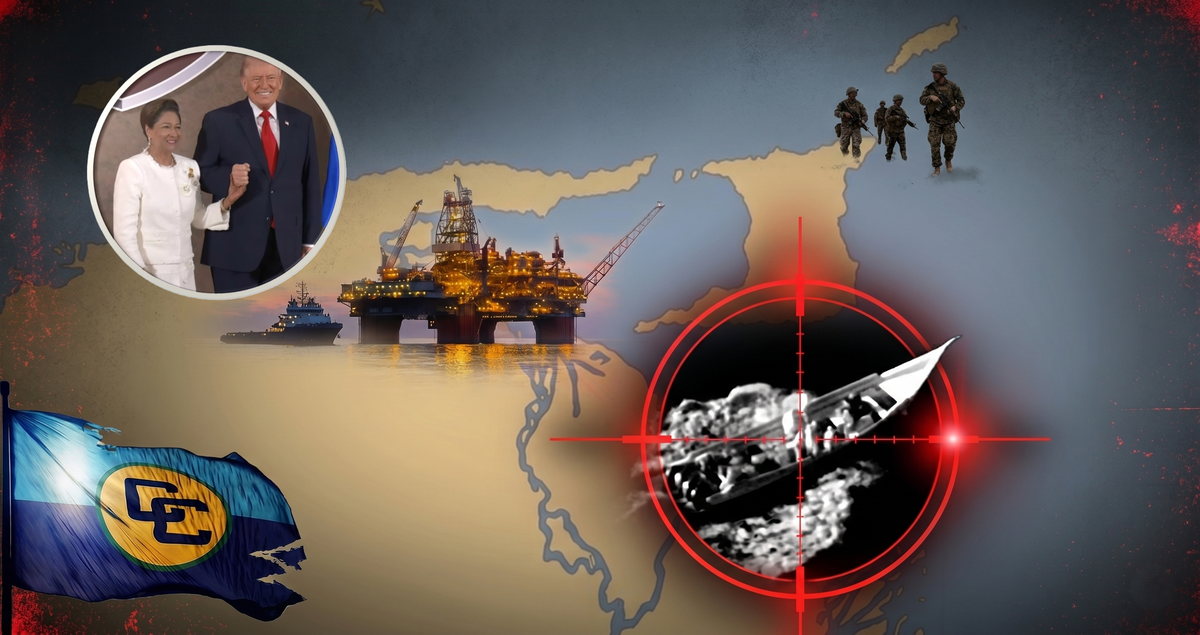
In a sharp departure from our traditional diplomacy, the administration has openly endorsed the heavily militarised US "Operation Southern Spear", launched in early September 2025 by the Trump administration to target alleged drug cartels. By late November 2025, the administration had allowed the US Marines to deploy a state-of-the-art G/ATOR (Ground/Air Task-Oriented Radar) system at ANR Robinson International Airport in Tobago. The USS Gerald R. Ford carrier strike group – the world's largest aircraft carrier – was deployed to the Caribbean alongside seven other warships and roughly 15,000 troops. The destroyer USS Gravely arrived in Trinidad on October 26, 2025 to spend four days conducting joint exercises with US Marines and T&T forces. T&T also approved the use of its airports by US military aircraft for "logistical" rotations.
When American forces conducted Operation Absolute Resolve on January 3, 2026, capturing Venezuelan President Nicolas Maduro and flying him out of the country, Trinidad and Tobago stood as a glaring outlier in the region. Persad-Bissessar publicly distanced herself from CARICOM, labelling the bloc an "unreliable partner" and accusing it of supporting a "narco-government" through what she called a "fake zone of peace narrative". "Our citizens can rest assured that I will always make decisions that put TT first," she declared. "CARICOM will not determine our future; only the citizens of our country will choose our path."
The diplomatic fallout has been severe. Barbados Prime Minister Mia Mottley criticised the US military actions, warning that "peace is being threatened; we have to speak up". She added: "We do not accept that any entity has the right to engage in extrajudicial killings." St Vincent Prime Minister Ralph Gonsalves was scathing too: "You cannot be judge, jury and executioner without giving people an opportunity to defend themselves in a court of law." We then became entangled in a bitter governance dispute over the reappointment of CARICOM Secretary-General Dr Carla Barnett in February 2026. Trinidad and Tobago claimed it was uninvited from the retreat in Nevis where the decision was made and threatened to withhold its $5 million annual contribution to the regional body, further fracturing the alliance.
Tensions with Caracas reached their peak when Venezuela's parliament declared Persad-Bissessar persona non grata on October 28, 2025. She dismissed the move with a single line to AFP: "Why would they think I would want to go to Venezuela?" Venezuela responded by suspending its energy agreement with T&T and on June 5, 2025 the PM had already told the Coast Guard to use deadly force against any unidentified Venezuelan vessels entering our waters. By late October 2025, the government was preparing a mass deportation exercise for at least 200 Venezuelans in detention. Civil society groups warned that the deportations would breach the principle of non-refoulement, and Amnesty International's 2026 annual report documented that Trinidad and Tobago "continued to push back people seeking asylum, in violation of international human rights law".
The most devastating consequence of this aggressive "T&T First" alignment is the blood of our own citizens. US strikes under Operation Southern Spear had, by mid-April 2026, killed at least 181 people across over 50 vessels in the Caribbean and Eastern Pacific. Among the victims were Trinidadian fishermen – 26-year-old Chad Joseph and 41-year-old Rishi Samaroo – killed in an October 14, 2025 strike while returning from Venezuela to their homes in Las Cuevas. The strike killed all six men aboard. Their grieving families, represented by the American Civil Liberties Union (ACLU) and the Center for Constitutional Rights, filed Burnley v. United States on January 27, 2026 in a Massachusetts federal court, seeking justice under the Death on the High Seas Act and the Alien Tort Statute.
The Prime Minister's response to the deaths was to advise local fishermen to "stay within the country's maritime boundaries". Joseph was the father of three children. Samaroo had been working on a farm in Venezuela and was returning home to help care for his elderly mother. Their families' grief is real; the legal questions about extrajudicial killings in international waters are real; the US administration has produced no public evidence that either man was a "narco-terrorist" of the kind their footage of the strikes claims to depict.
Persad-Bissessar's diplomatic engagement abroad has continued in parallel. She met President Donald Trump at the Summit of the Americas. She welcomed Indian Prime Minister Narendra Modi to Trinidad in July 2025, a visit during which Modi referred to her as "Bihar ki beti" – daughter of Bihar – referencing her ancestry. Foreign and CARICOM Affairs Minister Sean Sobers met King Charles in England. And in February-March 2026, Persad-Bissessar publicly supported the US-Israeli strikes on Iran that resulted in the assassination of Supreme Leader Ali Khamenei – another sharp break from CARICOM's traditional non-aligned posture.
For a small island nation to excuse the killing of its own citizens in international waters to keep its alignment with a superpower steady, all under the slogan of "T&T First", is a misjudgement that will haunt this administration for years to come. We have made ourselves comfortable in a position that previous governments would have considered unthinkable.