Caught in the Crossfire: Sovereign Waters, Autonomous Drones, and the Break in Regional Unity
A federal lawsuit is challenging US military airstrikes that killed two Trinidadian men last year. As the US reports another lethal strike this week and the government embraces a new autonomous warfare command, we must examine the diplomatic fallout.

The Brief
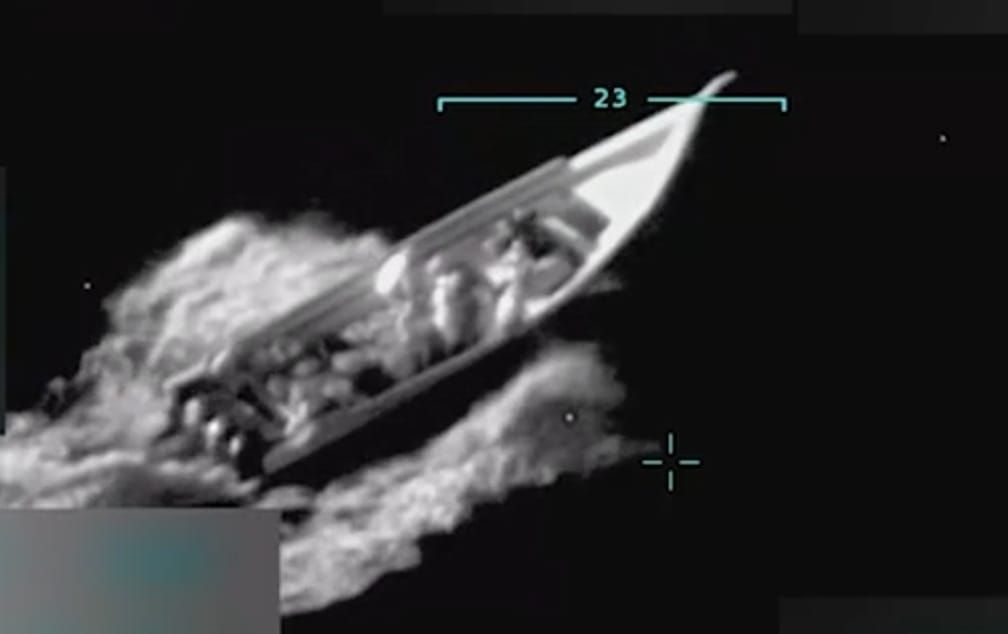
- A report in the Trinidad Guardian confirmed another US military strike killed three people in the Caribbean.
- Civil rights lawyers have already filed a federal lawsuit over an October airstrike that killed two Trinidadian men.
- US Southern Command has just launched the Autonomous Warfare Command (SAWC) to deploy unmanned military systems in the region.
- Trinidad and Tobago has joined the US-led Americas Counter Cartel Coalition, actively supporting these military operations.
- The UK has halted intelligence sharing with the US regarding Caribbean strikes over international law concerns.
I thought this was over. But then on April 20, a story on the AP wire caught my eye: US military strike on alleged drug boat kills 3 in Caribbean Sea.
It frequently appears that the Caribbean is viewed by global powers simply as a transit route, rather than a region of sovereign, independent nations. This latest strike is an uncomfortable reminder of the ongoing federal lawsuit filed by civil rights lawyers against the US government. The suit is on behalf of the families of Chad Joseph, 26, and Rishi Samaroo, 41, both of Las Cuevas in Trinidad, who were killed in a US military airstrike last October while returning from Venezuela.
The United States Southern Command (SOUTHCOM) has been conducting these operations in the eastern Pacific and the Caribbean, stating they are specifically targeting drug-traffickers under a campaign known as Operation Southern Spear. Everyone understands the massive, destabilising problem of the regional drug trade. The weapons and drugs moving through the Gulf of Paria and across porous borders are directly responsible for the high crime rates currently devastating communities in Trinidad and Tobago. The public absolutely wants the illicit trade stopped. However, conducting unilateral military strikes in the region, resulting in the deaths of over 120 people without trial over the past few years, is a direct violation of international law and basic human rights conventions.
Extrajudicial Action in Sovereign Waters
We need to look closely at the economic and geographic reality of places like Cedros or Icacos on the south-western peninsula. The coastline of Venezuela is just seven miles away across the water. For generations, the fishermen in these coastal communities have crossed that channel. The movement involves legitimate fishing, the purchasing of basic household goods, and in some cases, contraband. The economic desperation in Venezuela has only increased this cross-channel traffic. However, simply operating a boat with an outboard motor between Trinidad and Venezuela does not provide legal justification for a lethal military strike. The families of Joseph and Samaroo have stated clearly that they were returning home from farm work.
The US military's approach here lacks basic judicial oversight. Launching an airstrike on a small vessel without verifying the identities of those on board, or without attempting a maritime interception and physical arrest, bypasses the entire judicial process. It is an extrajudicial killing happening in sovereign waters. If a foreign military fired a missile at a vehicle driving down the M1 in England because they suspected the occupants of drug trafficking, the diplomatic fallout would be immediate, severe, and historic. It is necessary to ask why the response is entirely different when the incident occurs in the territorial waters of a developing nation in the global south.
This federal lawsuit is a necessary legal step, but it highlights a profound failing in local representation when the families of these men have to rely on foreign civil rights lawyers to demand justice. The legal action forces the US government into a position where it must answer difficult, specific questions regarding its military operations. What are the exact rules of engagement for Southern Command in the Caribbean Sea? How does the military distinguish between a legitimate security threat and civilian fishermen moving between coastlines? What level of civilian casualties is factored into their operational planning before a strike is authorised?
Automated Warfare and Energy Diplomacy
These questions are now significantly more urgent given SOUTHCOM's latest expansion. This week, Marine Gen. Francis L. Donovan announced the establishment of the Autonomous Warfare Command (SAWC), a new unit dedicated to deploying autonomous and unmanned systems across the region. The US military intends to leverage the American defence ecosystem by blanketing the Caribbean with drones and AI-integrated systems to hunt cartels. According to a story by my former Guardian colleague Gail Alexander, government officials in Port of Spain have welcomed the deployment of these cutting-edge systems, but the reality is deeply concerning: the Caribbean Sea is becoming a testing ground for automated lethal force.
What makes this situation even more complex is the diplomatic response from our own government. Rather than demanding answers regarding the deaths of its citizens, the government has formally aligned itself with this militarised approach. In March, Trinidad and Tobago officially joined the US's Americas Counter Cartel Coalition. This stance represents a massive shift in foreign policy and has severe implications for the entire region. By actively supporting unilateral US military operations, the government seems willing to trade a degree of national sovereignty for the convenience of having a foreign power police our maritime borders - and, as many analysts suggest, to secure favourable US sanctions waivers for access to Venezuela's Dragon gas field.
Historically, the Caribbean Community (CARICOM) has maintained a strict policy of non-interference and respect for national sovereignty, particularly regarding the political situation in Venezuela. The bloc has long advocated for diplomatic resolutions over military intervention. By breaking ranks and supporting US military strikes, the Trinidad and Tobago government has fractured that regional unity. When individual member nations abandon the agreed-upon bloc position to curry favour with a superpower, it weakens CARICOM as a whole. It undermines the collective bargaining power of the region and sets a precedent that foreign militaries can operate with impunity in Caribbean waters as long as they secure quiet approval from a single national capital. A divided Caribbean is much easier for large nations to manage and dismiss.
Allied Warnings and Legal Jeopardy
The gravity of this situation becomes even more apparent when we look at how other US allies are reacting. The United Kingdom, which has a deeply established intelligence-sharing relationship with the US, halted its sharing of information regarding suspected drug trafficking vessels in the Caribbean late last year. Downing Street made this move because British officials grew concerned that the intelligence provided to the Joint Interagency Task Force South was being used by the US military to select targets for lethal strikes. The UK government recognised that continuing to share information could make them complicit in actions that the UN human rights chief has described as extrajudicial killings. Canada has reportedly taken similar steps to distance itself from the targeting operations.
When your closest international allies refuse to share information because they fear complicity in unlawful killings, it should be a massive warning sign. This brings us directly to the potential legal jeopardy facing Trinidad and Tobago. If the UK is pulling back to avoid international tribunals, where does our government's formal membership in the Americas Counter Cartel Coalition leave the country? If local intelligence, radar data, or territorial airspace was used by the newly formed SAWC to facilitate these operations, the government could be heavily implicated. The current federal lawsuit in the US relies on maritime laws like the Death on the High Seas Act and the Alien Tort Statute, which allow foreign nationals to sue for violations of international law. By actively supporting operations that bypass the judicial process, the government opens the door to future legal challenges, international sanctions, or censure from global human rights bodies.
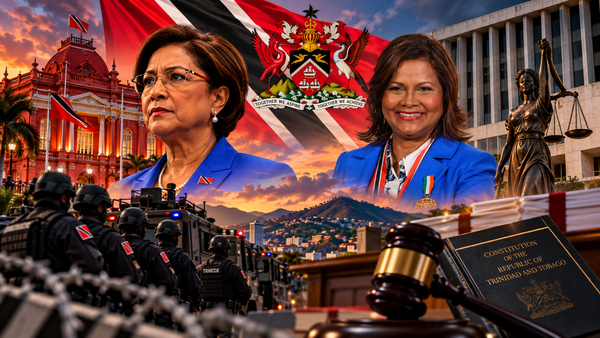
The public must demand complete transparency from Prime Minister Kamla Persad-Bissessar and the Minister of Homeland Security Roger Alexander, among others. Anonymous quotes welcoming foreign military technology are insufficient. Pressing questions need immediate answers on the parliamentary floor. What is the exact nature of our cooperation with the US Southern Command's new autonomous division? Are we actively sharing intelligence that leads to automated lethal military strikes against vessels that may carry our own citizens? And, perhaps most importantly, is the government's silence on these extrajudicial killings a negotiated condition for keeping the Dragon gas deal alive?
The war on drugs in the Caribbean is entirely driven by the massive consumer demand for narcotics in North America and Europe. The wealth generated by that demand empowers the cartels, but it is the citizens of transit nations who bear the violence and the consequences. To then have a foreign military deploy autonomous weapons in regional waters, with the formal blessing of local leadership, adds insult to injury. It treats the entire area as an active warzone where regular judicial rules do not apply, and where national sovereignty can seemingly be bought with energy concessions. If the region fails to demand accountability for the deaths of these citizens, it sets a dangerous precedent regarding the ongoing safety of the people who live and work in the Gulf of Paria.