Unclaimed & Unseen: What the Cumuto Cemetery Discovery Tells Us About Institutional Decay
The horrifying discovery of 56 bodies at a cemetery in Trinidad has exposed severe failures in how the country's morgues operate. As police investigate this unlawful disposal, those of us watching from abroad must ask how the government allowed this administrative decay to happen.

The Brief
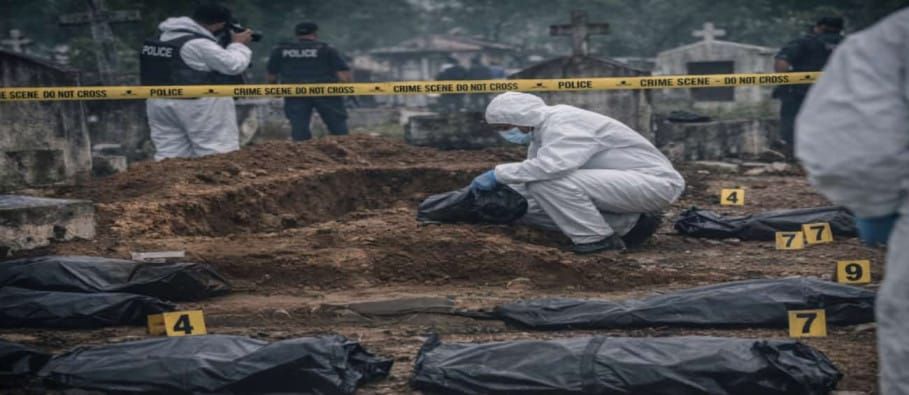
- 56 bodies, including 50 infants, were found dumped at a Cumuto cemetery on April 18.
- Police suspect unlawful disposal of unclaimed corpses, as adults had morgue toe tags.
- This incident highlights a deep institutional decay within government public health facilities.
- The country remains under a declared emergency originally implemented to tackle gang violence.
Watching the news from home when you live abroad often requires reading between the lines of official press releases. On April 18, police announced the discovery of 56 bodies, 50 of them infants, unlawfully disposed of at a cemetery in Cumuto. The initial Trinidad and Tobago Police Service statement indicated that the adults found had morgue toe tags, and some showed clear signs of autopsies. All evidence points to the clandestine disposal of unclaimed corpses by government or contracted workers. It is a headline that stops you in your tracks. Fifty infants. Fifty lives discarded in a way that defies basic human decency. These remains were probably removed because the facilities meant to hold them are literally falling apart, unable to prevent the natural processes of decay due to broken equipment and long-term neglect.
It is hard to look past the sheer emotional weight of that number. Try to picture fifty infants. Each one of those toe tags represents a child who was carried, delivered, and lost. Some might have been wards of the State, infants without families to claim them. Others might belong to families who were simply too poor to afford the high costs of a private funeral. Poverty should never strip a person of their right to a dignified burial. When a family leaves their deceased child in the care of a State hospital, they do so with the expectation that the remains will be handled with respect. To learn that these bodies were loaded onto a truck and dumped in a shallow grave is an unimaginable betrayal. The grief of losing a child is heavy enough; compounding that grief with the knowledge of such callous treatment is an unforgivable injury to those families. It speaks to a rot in the system, a decay of institutional empathy where human beings are reduced to administrative burdens that need to be cleared out.
A Collapse in the Chain of Custody
When incidents like this occur, they force a hard look at the structural decay of Trinidad and Tobago's public services. The country is operating under a State of Emergency that has been extended multiple times since December 2024. The police service is stretched entirely thin managing gang violence and trying to maintain basic national security. However, this discovery points to administrative and procedural negligence rather than street-level crime. If mortuaries, hospitals, and the broader forensic apparatus cannot properly track and respectfully manage human remains, it exposes a deep administrative rot. For those of us in the diaspora reading this, it is a jarring reality check. Violence features heavily in the news cycle, but we do not expect bureaucratic machinery to break down so spectacularly.
The Forensic Science Centre in St James, along with various hospital mortuaries, has been the subject of formal complaints for years. The reports are consistent and deeply troubling: severe understaffing, a lack of forensic pathologists, and malfunctioning refrigeration units. Families frequently wait weeks to claim their relatives due to immense backlogs. When refrigeration fails, the physical decay of the bodies accelerates, creating a public health hazard inside the very institutions meant to manage health. What the Cumuto discovery suggests is that instead of repairing the system and fixing the infrastructure, individuals within it decided to bypass established legal procedures entirely to clear space. This is not simply a paperwork error or an administrative oversight. It represents a complete failure of public health management.
Public Health Codes and Legal Liability
The official process for dealing with unclaimed bodies or pauper's burials is highly regulated for a reason. Local regional corporations and the Ministry of Health have clear legal protocols to ensure a basic standard of decency. When those protocols erode entirely, the chain of custody means nothing. The legal framework in Trinidad and Tobago regarding the disposal of human remains is governed by public health ordinances designed to prevent disease outbreaks and maintain sanitation. A mass, undocumented disposal like the one in Cumuto is a direct violation of these health codes.
Beyond the statutory regulations, there is a common-law duty to dispose of the dead safely and respectfully. When government contractors or workers violate these laws, they expose the government to massive legal liability. If the identities of these infants are ever confirmed and their families located, the government could face significant legal action for negligence and the mishandling of remains. But the institutional decay is so advanced that the people responsible apparently did not fear any legal or professional repercussions for their actions.
Demanding Accountability and a Full Audit
Direct questions must be asked of the Ministry of Health and the Ministry of Homeland Security. How does a large quantity of human remains leave a government facility without a verifiable paper trail? Who signed the release forms? Are the facilities so insecure that remains can be removed without inventory checks? The initial silence from the upper levels of government in the immediate aftermath is concerning. Transparent investigations are required, and the public needs regular updates, not a closed-door internal committee that produces a redacted report long after the news cycle has moved on to the next tragedy.
The normalisation of dysfunction is the biggest threat to Trinidad and Tobago right now. People on the ground have become used to coping when basic utilities fail or infrastructure breaks down. But nobody should accept this level of institutional failure. The way a society treats its dead is a direct reflection of how it values its living population. If the public accepts that 56 bodies can be handled outside of the law, they are accepting that the State has no duty of care towards them. A complete, independent audit of every mortuary in the country is the only logical next step to stop the rot. For some in the diaspora, it is a real reminder of a state of affairs that drives so many to leave their home country in the first place.