Part 1: Campaigns, Consultants & Identity Politics
The UNC's slick 2025 campaign exposed a serious lack of political finance transparency. Both parties have a long history of relying on shadowy foreign consultants who weaponise racial divides, and the toxic partisan tribalism that follows continues to pollute our national discourse today.
The Brief
- The 2025 election laid bare the absence of campaign finance regulation, and the Commonwealth Observer Group's repeated calls for legislation remain unanswered.
- The UNC's slick digital operation invited fair questions about who funded it. The PNM's history with Bell Pottinger-style firms means neither party comes to this with clean hands.
- Cambridge Analytica's 2010 "Do So" campaign, engineered to suppress Afro-Trinidadian turnout, remains the cautionary tale that should drive reform.
- Twelve months in, the partisan rhetoric has not cooled. The PM's October 24, 2025 attack on the PNM, and her January 2026 description of Independent Senators as "boot lickers and brown nosers", set a tone that is hard to walk back.
To understand the climate this government inherited, we have to start with the mechanics of the April 2025 election itself.
Modern elections are rarely won on the merit of policy. They are won on narrative, perception, the management of emotion, and the strategic deployment of capital. There was a glaring disparity between the two major forces in 2025. The PNM's campaign felt lethargic, disjointed, and detached from the raw frustrations of the populace. The view among political analysts and average citizens alike was that the ruling party appeared to take things for granted. They relied too heavily on the inertia of incumbency and the historical loyalty of their base, rather than articulating a hopeful vision for the country's future. By any honest measure of modern campaigning, this assessment is fair. The PNM approached April 2025 with a degree of entitlement, misreading the room and underestimating the electorate's anger – particularly among young voters struggling under economic stagnation and crime.
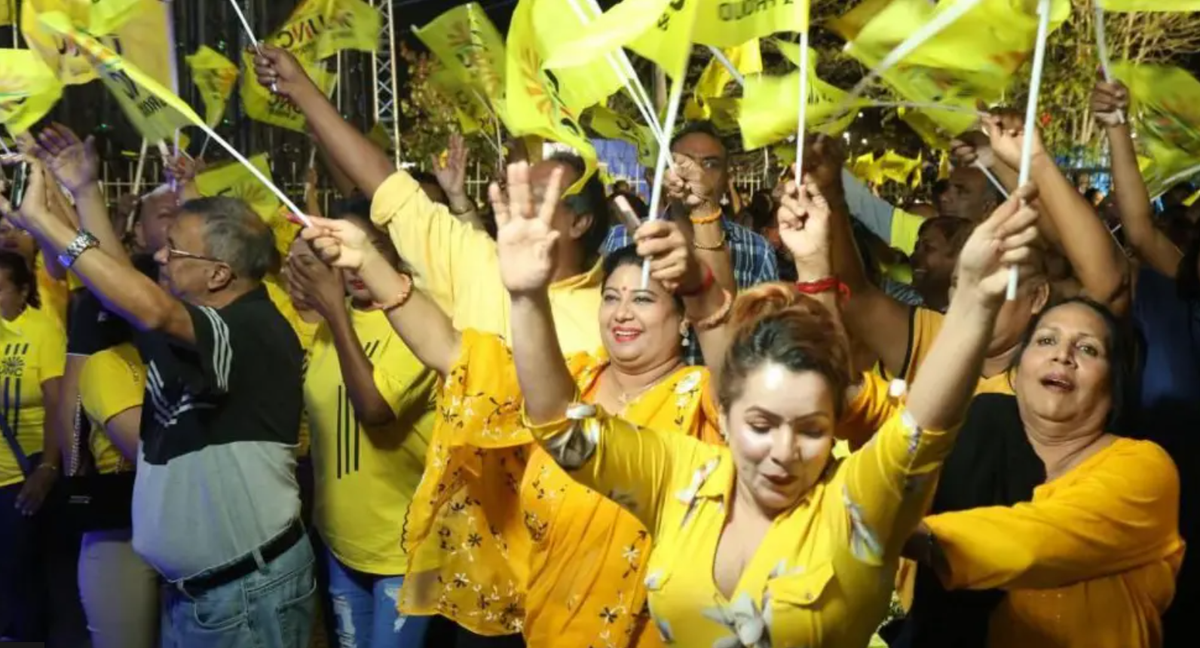
In sharp contrast, the UNC ran a campaign that was widely described as a slick, well-oiled machine. From targeted social media blitzes and digital advertisements to flawlessly executed rallies, the UNC dictated the daily narrative and kept the PNM on the defensive.
That polished, high-definition execution begs uncomfortable questions that go to the heart of our sovereignty: Who built this machine, and who paid for it?
The Commonwealth Observer Group (COG), in their final report on the 2025 elections, explicitly highlighted the absence of campaign finance laws. The COG urged Parliament to pass a bill regulating the disclosure of political party financing – a recommendation they had already made a decade earlier during the 2015 elections. Because of this enduring legislative void, the public is left in the dark about who funded a multi-million-dollar campaign, which financiers are now owed favours, and which foreign consultants or international PR firms were quietly pulling strings. It is an open secret that US-based digital-first agencies – companies like Targeted Victory, known for running aggressive political campaigns – are routinely courted by political entities across the globe looking for an edge. The digital footprint, micro-targeting precision, and algorithmic dominance of the UNC's 2025 victory points to a level of capital and data expertise that goes well beyond local volunteerism.
Is the involvement of shadowy foreign consultants good for our developing democracy? History tells us no. To understand the danger of this opacity, look back at the UNC's 2010 campaign, which used the services of the Strategic Communication Laboratories (SCL) Group, the parent company of the disgraced Cambridge Analytica. Operating in the shadows and funded by former FIFA executive Jack Warner, Cambridge Analytica designed an ethnically-targeted psychological operation called the "Do So" campaign. Presented to the public as a spontaneous grassroots movement, "Do So" was an engineered plot aimed at depressing political participation specifically among young Afro-Trinidadians, by encouraging them not to vote as a form of protest. By suppressing Afro-Trinidadian turnout, the campaign favoured the UNC, whose traditional base is predominantly Indo-Trinidadian. With successor firms to Cambridge Analytica – Emerdata, Data Propria, Emic – still operating globally to influence politics and weaponise voter data, the opacity of our electoral funding remains a structural vulnerability.
The PNM is equally guilty of dipping into this dark underworld of political consultancy. Internationally, PR firms with controversial records have been used by both sides – the most infamous being Bell Pottinger, which before its 2017 collapse was notorious for fomenting racial tensions in South Africa on behalf of the Gupta family, deliberately designing campaigns to incite racial hatred and divide the nation along ethnic lines to distract from state corruption. When both major parties are willing to employ foreign mercenaries who specialise in psychological warfare, the integrity of our sovereign elections is fundamentally compromised.
Which brings us to the most enduring tragedy of Trinidad and Tobago politics: the deliberate exploitation of race and racial identity. Our society is a beautiful, complex tapestry, but during election cycles it is violently torn apart by political entities desperate for power. The duopoly of the Afro-based PNM and the Indo-based UNC relies heavily on tribal voting, and modern digital campaigns have weaponised this divide further. Foreign consultants do not care about the social fabric of our islands. They use algorithms to identify our ethnic insecurities and feed them back through targeted advertisements and dog-whistle rhetoric. Whether through subtle manipulation or overt slogans – like the UNC's heavily criticised "Trinity Triangle" campaign, which portrayed Afro-Trinidadians as impoverished and dependent on handouts – race is used as a blunt instrument. It marginalises those who do not fit neatly into binary categories, and whose very existence challenges the rigid voting blocs the parties rely on.
Worse, the euphoria of election night quickly gave way to bitter, partisan tribalism. Rather than adopting a unifying tone to heal a fractured nation, the new administration has frequently used inflammatory rhetoric to mask its early stumbles. On October 24, 2025, the Prime Minister launched a baseless attack on the PNM, claiming without evidence that the opposition was a party "long suspected of being financed by the local drug mafia". The Opposition fiercely condemned the statement as a "malicious lie" and a desperate attempt to distract from the government's growing list of failures.
The pattern repeated when the government's own legislation came under proper parliamentary scrutiny. In late January 2026, during debate on the Zones of Special Operations Bill, the Prime Minister described Independent Senators as "boot lickers and brown nosers" appointed by President Christine Kangaloo, whom the PM in turn called a "low-level PNM functionary". She later accused two Independent Senators of seeking personal favours in exchange for their votes – accusations the Law Association of Trinidad and Tobago condemned as an authoritarian attempt to undermine the independence of the upper house. None of this would be remarkable from any Opposition Leader trying to score points. From a Prime Minister, it sets a dangerous precedent.
The coarsening of our political discourse proves that while the players in the Red House have changed, the divisive nature of our politics remains tragically intact. We are caught in an endless cycle where the tribal drumbeats of election season never truly stop echoing.