Turning an Environmental Crisis into a Caribbean Energy Success
A Trinidadian scientist has spent seven years turning a Caribbean environmental crisis into fuel. The region has been quietly figuring this out together, without needing Washington's permission or foreign firms taking the value. Trinidad and Tobago now needs to get on board.
The Brief
- Sargassum in the mid-Atlantic has already exceeded 60 million tonnes this year, worse than the record 2025 season and roughly sixty times the 2011 baseline.
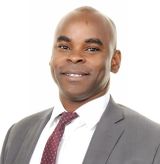
- Dr Legena Henry, a Trinidadian-born researcher at UWI Cave Hill in Barbados, leads Rum and Sargassum Inc, which has demonstrated the world's first bio-compressed natural gas vehicles powered by sargassum.
- Barbados is aiming to be fossil-fuel free by 2035; the country's energy scarcity and its national commitment have driven the leading Caribbean work.
- Grenada, Mexico and other regional states have developed their own sargassum-to-value industries, from biogas to fertiliser to building materials.
- Trinidad and Tobago has engaged with the sargassum question on several institutional tracks – NGC Green sponsorship, an Energy Chamber pitch, research at UTT and UWI St Augustine, and a Japanese-funded National Sargassum Management Task Force under the previous administration.
- The Task Force has since been disbanded. Dr Henry is currently in active conversations with IDB Labs and the Caribbean Development Bank about a regional programme, and is asking Trinidad and Tobago to say yes to being part of it.
There is a memory a lot of us carry from Mayaro and Manzanilla, of a beach that was clean. It is not, most weeks, the beach that is there any more.
Renelle Kissoon is the local government councillor for Cocal/Mafeking within the Mayaro/Rio Claro Regional Corporation. She grew up in Grand Lagoon Village, walking distance from the beach. In a recent profile, she said something that stopped me. "Growing up, we didn't know anything about sargassum. That was never the word." She has watched, over the course of her adult life, a two-month seasonal nuisance turn into a year-round crisis. The mounds of yellow-brown weed piled along her district's shoreline can be hundreds of metres wide. They stop the fishing. They keep visitors away. They rot in the heat, releasing methane and hydrogen sulphide, and smell like a country that has stopped functioning.
And this year, on the numbers, is the worst the region has ever recorded.
The problem
Sargassum is a floating brown seaweed that has always existed in the Atlantic. Before 2011, its presence in the Caribbean was minor and episodic. Since 2011, something has changed. The University of South Florida's Optical Oceanography Lab, which tracks the biomass by satellite, recorded roughly one million tonnes across the Atlantic-Caribbean system in 2011, some 38 million tonnes in 2025, and – according to Dr Legena Henry, the Trinidadian scientist who runs Rum and Sargassum Inc at the University of the West Indies's Cave Hill campus – over 60 million tonnes already this year. "Beach clean-up costs are already unmanageable," she told me. "This year was horrendous for no real breaks in the sargassum arrivals."
That is the trajectory. Fifteen years, sixty-fold growth. The reasons are the ones that make most Caribbean environmental problems worse: warming sea temperatures, nutrient run-off from the Amazon and Orinoco, Saharan dust drifting west across the Atlantic, and shifting ocean currents. Trinidad and Tobago is not the worst-affected country in the region, but we have had significant events. The 2018 Tobago influx was treated as a natural disaster and cost the House of Assembly nearly TT$4 million in clean-up. Mayaro, Manzanilla, Cedros, Icacos, Speyside, Roxborough and Lambeau have all been recurring subjects. What was seasonal is now, on Kissoon's testimony from her own district, year-round.
Some hotels in the region are now spending upwards of US$2 million a year on clean-up, or on shipping tourists, along with food and entertainment, to sargassum-free beaches for the day. The public cost is bigger and less visible. Caribbean coastlines are among the most valuable economic assets in the region, and the sargassum problem is not going away. Something else has to be done with it.
What Barbados built
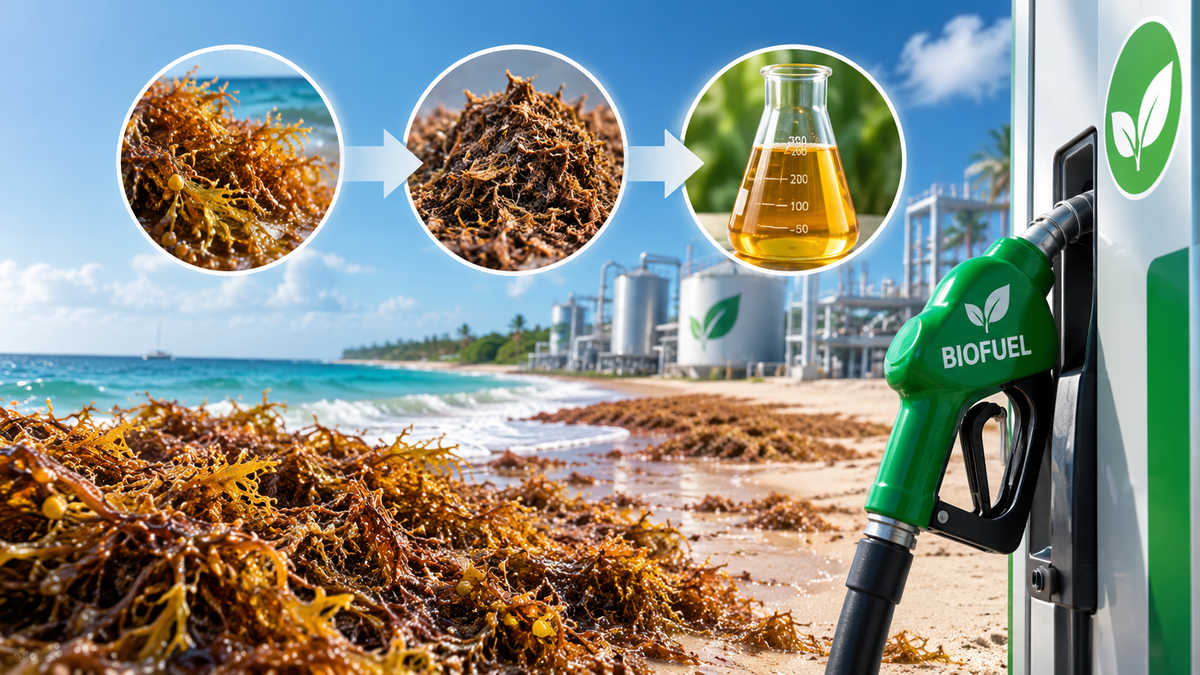
In 2018, Barbadian Prime Minister Mia Mottley declared sargassum a national emergency. That same year, Dr Henry, along with her student Brittney McKenzie, started asking a question that had not, at that scale, been asked before. What if you took the sargassum from the beaches and combined it with wastewater from the country's rum distilleries and dung from the island's indigenous blackbelly sheep, and fed the mixture to an anaerobic digester? The digester's bacteria would produce methane through methanogenesis. Methane is natural gas. Compress it, and it is fuel.
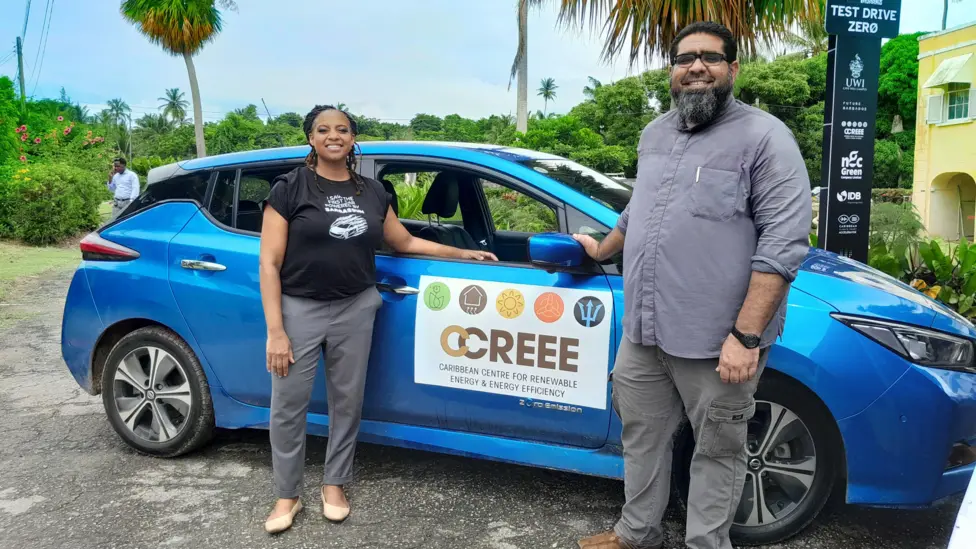
A patent was filed in 2019. The Blue Chip Foundation funded 22 months of research. UWI Cave Hill took an equity stake in the resulting venture, Rum and Sargassum Inc. By 2024, the team had done what most sargassum projects around the world had not managed. They demonstrated a working car powered by bio-compressed natural gas made from the recipe. The conversion cost for a vehicle to run on the fuel was about US$2,500. The BBC covered it. The Caribbean Development Bank noticed. Letters of interest have since arrived from Grenada, Anguilla and the Dominican Republic.
The result surprised the team themselves. Dr Henry's group ran the first experiments in the summer of 2019 with sargassum, rum distillery wastewater and sheep dung as feedstocks. They produced results, in Dr Henry's words, "comparable to grass production of biogas." Only afterwards did they read the existing scientific literature that said sargassum should not produce useful biogas. John Milledge, of the University of Greenwich's Algae Biotechnology Research Group, had published exactly that conclusion, based on samples collected and dried in Turks and Caicos and shipped to his lab. "Our big surprise," she said, "was to hear about him after we ran experiments and had successful biogas production." That is the kind of result that only happens when the work is done locally, with local materials, by researchers who are not simply repeating what the literature says can be done.
What is worth noting about the Barbados story is not just the science. It is the model. UWI Cave Hill is not just publishing papers. It is an equity partner in the commercial venture that grew out of the papers. That is a different institutional posture from most Caribbean research on climate and energy. It says the university sees itself as part of the country's productive economy, not just as an academic observer of the country's problems. The posture, and the results that have followed it, is the specific institutional model Trinidad and Tobago has been slower to develop.
The wider region moving too
Barbados is not alone.
In October 2024, Grenada hosted a sargassum conference with the European Union. Prime Minister Dickon Mitchell used the platform to vow that his country would transform 10,000 tonnes of sargassum into useful products by 2026. Thirty-three companies pitched ideas. A startup called SarGas set up a small digester that turns sargassum into methane that fuels the oven at a local bakery, and is now applying for permits to scale up to grid-scale biogas electricity.
Mexico has moved further and faster than anyone else in the region. A refiner called Carbonwave is already selling sargassum-derived fertiliser abroad and, having secured domestic regulatory approval, is now targeting Mexican farmers. Carbonwave is also targeting the cosmetics and textiles industries. The state of Quintana Roo is expanding a biofuel plant in Cancun. Researchers at the National Autonomous University of Mexico have developed something called Sargapanel, a building material made from 60 to 70 kilograms of wet sargassum per panel. The panels are stronger, more flexible and more fire-resistant than conventional versions. They are recyclable. And, in a detail that made me look twice, the researchers calculate that every five tonnes of wet sargassum used in the panels equals one carbon credit worth 10 to 30 US dollars on international markets.
At UWI Cave Hill, separately from Dr Henry's biofuel work, Dr Srinivasa Popuri was awarded funding in January 2026 to refine sodium alginate from sargassum for use as a biopolymer plastic alternative. Alginate has more than 150 industrial applications, from cosmetics to dentistry to textile printing. There is a plausible path from Caribbean beaches to a potentially large Caribbean industry.
Mexico is hosting an EU-Caribbean sargassum conference in Cancun in October. The region is, in a way that most political stories this year would not suggest, cooperating.
Energy geography, and the case for T&T
Dr Henry identifies something structural about the region's uneven energy geography. "It was a perfect storm," she told me, referring to the alignment of Barbados's national commitment to be fossil fuel-free by 2035, IDB-funded students in her lab, and a Barbadian society that had already been living with the reality of energy scarcity for a generation. She recalled a specific moment: "In 2013 I remember being in Antigua and hearing old people in the line in the grocery talking about kilowatts." She remembers being struck by that, observing that T&T citizens do not, generally speaking, think in those terms. The country's institutions have not needed to build the muscle for renewable innovation because the country has not experienced the pressure that would drive it. The incentive to build a renewable energy sector comes from scarcity. Where energy is cheap and reliable, that incentive is missing.
"If I had done similar experiments in Trinidad, I don't think it would have seen the light of day," Dr Henry said, "because there is no widespread perceived need for renewable energy solutions in Trinidad, as it's oil and gas rich."
That analysis could sound like a critique of the country. It is not. When I asked whether Trinidad and Tobago had fallen behind on this, her answer surprised me. She doesn't think the country is behind – she thinks it is an opportunity waiting to happen, with the potential to move faster than anyone else in the region.
Her argument goes like this: Trinidad and Tobago is a global leader in the natural gas industry. The country's offshore expertise is deep. There are already 20,000 CNG customers driving on the nation's roads. CNG gas stations exist. The infrastructure to compress methane and put it into cars is already built. Sargassum-derived methane is not a different product from the natural gas the country already produces. It is chemically the same thing, just produced from a renewable source instead of an underground reservoir.
In her framing, the country is not being asked to build a solar sector from scratch. It is being asked to add a renewable input to a natural gas value chain the country already dominates. "You would probably win in the conversations in the energy sector in Trinidad," she said, "if it was presented as: 'Let's start now supplementing what comes out of the ground with what's floated towards us in the ocean.'"
The country's current strategic focus – the BP-Cocuina gas deals I wrote about last month, the data centre MOUs from July, the wider industrial economy – actually strengthens rather than weakens the case for sargassum-derived gas. All of these commitments require more energy. Renewable natural gas from sargassum adds supply without competing with the existing sector. It fits.
T&T's engagement
Trinidad and Tobago's energy sector has heard the pitch and has taken it seriously. The Energy Chamber invited Rum and Sargassum to present at its annual conference, where the team came second in a pitch vote among the country's energy executives. That is not a group easily impressed by novelty. When Barbados demonstrated the world's first sargassum-powered car at an event called Test Drive Zero, NGC Green – the renewable energy subsidiary of T&T's National Gas Company – was one of the sponsors. A Trinidad and Tobago state entity was in the room when Barbados made the world take notice.
The engagement went further than one event. In 2024, the government established the National Sargassum Management Task Force, with funding from the Government of Japan, under the direction of the then Minister of Planning and Development, Pennelope Beckles. The Task Force's remit was operational: clean-up, removal, and safe disposal of sargassum arriving on the country's coastlines. Its work was about protecting the beaches. Alongside it, and separately, the University of Trinidad and Tobago and the UWI St Augustine were both researching potential commercial uses of the seaweed – conversion into manure, fertilisers, fungicides and fish food. Two tracks of institutional work, one operational and one academic, both taking the sargassum question seriously.
The academic thread went further still. In January 2021, the energy company Proman announced a partnership with UWI St Augustine to study the potential of a biogas supply chain in Trinidad and Tobago. The study looked at agricultural by-products, poultry waste, food waste, wastewater, and sargassum. The UWI side was led by Professor John Agard, then Director of the St Augustine Centre for Innovation and Entrepreneurship. Two years before Rum and Sargassum demonstrated its bio-CNG car in Barbados, the same conceptual work – can this seaweed become fuel? – was being investigated formally on T&T soil, by one of the country's most respected environmental scientists in partnership with one of its largest industrial companies.
Since then, the Task Force has been disbanded. NGC Green's engagement with Rum and Sargassum has stalled. "There has since been a shift in leadership at that organisation," Dr Henry said, "and we have not really heard a lot from them since that change in government." She was diplomatic about it, leaving the invitation to re-engage open: "There was expressed interest and some amount of support coming out of Trinidad, with promises for future work, and I am happy to hold Trinidad to their promises."
That is not accusation. It is a pattern. The country has, on the sargassum question, done more than most in the wider region. It has built management capacity, funded academic research on multiple tracks, sponsored a world-first demonstration, and been in the regional conversation from the beginning. What it has not yet done is connect any of those tracks to the regional funding architecture Dr Henry is currently assembling – and, with the disbandment of the Task Force, the country has stepped back from operational readiness at the exact moment when the pressure on the coastline is peaking.
Agard's contribution
John Agard is a name Trinidad and Tobago should know better than it does. Emeritus professor, former chairman of the Environmental Management Authority, one of the Caribbean's most cited environmental scientists, and a Lead Author on multiple Intergovernmental Panel on Climate Change assessments. He died in late June this year at 71. The country lost, in his passing, one of its most careful scientific minds on the climate transition.
Dr Henry worked with him about 11 years ago, when he helped her fund a student who was part of a team of UWI Cave Hill students she took to MIT and Harvard for research seminars in the summer of 2015. She reconnected with him later through the UWI St Augustine intellectual property office, working on protecting her inventions. She also served with him on a UWI committee focused on advancing the region's climate agenda.
"He was an encourager. He was a supporter. He was an advocate for innovation coming out of our campus. He was happy to welcome me to St Augustine and to encourage me to keep working with students the way I did."
She was clear that she did not know the specifics of Agard's own sargassum work, but she named what he had been trying to do at institutional level. He was, she said, "trying to empower a campus that would produce innovative answers to our regional questions, and even the concept that our regional answers could solve global problems because of our special perspective as people from the Caribbean islands."
His career was consistent with that framing. The IPCC work. The EMA chairmanship. The Proman-UWI biogas study. The wider arc was about building the institutional foundations for a country that could think seriously about its natural systems and its economic future in the same conversation. His encouragement of a young Trinidadian scientist to travel to MIT in 2015 and his 2021 leadership on a formal Trinidad and Tobago biogas study were two moments in the same continuous work. Institutions that empower innovators produce innovators. The country has produced them. What it has not always done is keep them, or the work they leave behind.
The regional ask
The specific opportunity now on the table is not about single-island projects. It is about a coordinated regional approach to the funding that would take Rum and Sargassum's work from pilot scale to national infrastructure.
Regional funders like IDB Invest and the Caribbean Development Bank (CDB) operate at ticket sizes of several hundred million US dollars. They do not fund single small plants in single small islands. They fund regional programmes with distributed upstream research on the ground in participating countries. Dr Henry is currently in active conversations with IDB Labs and setting up meetings with the CDB about exactly this. What they need is enough Caribbean states saying yes together.
Rum and Sargassum can drive six cars on biogas within months, at a cost of less than US$100,000, from a pilot biogas station in Barbados that is nearly built. That is the current scale. The regional opportunity is orders of magnitude larger, and it is available only if Caribbean governments coordinate on the upstream work in the next twelve months.
I asked Dr Henry what she would say to a government minister in Port of Spain who read this piece and asked what one thing the country could do this year to start catching up. Her answer was specific.
"I would want to see Trinidad and Tobago – either the Minister of Energy or the Minister of Finance – say: 'Yes, we're getting behind this. Yes, we're ready to work as a State with this regional fund and facilitate these studies to happen on our soil.' That would be great. And those conversations are happening now. So this is a perfect time to be answering this question."
The ask is not for a national programme. It is not for a T&T-only initiative. It is for the country to be one of the four or five Caribbean states that commit to a regional programme being assembled now, with the funding institutions that fund exactly this kind of work. Upstream research on local soil. Data collection that would de-risk the wider regional investment case. A seat at the table Dr Henry is currently setting.
The Caribbean, doing something for itself
A lot of what I have written on recently has been about the specific ways the country's institutional architecture is fragile or under strain. The State of Emergency arc. The Preventative Detention Orders. The data centre MOUs. The BP-Cocuina gas deals and the OFAC framework they depend on. Those are all real stories and they deserve the attention they have had.
The sargassum story is a reminder that the Caribbean also produces good news, at institutional scale, when it chooses to. A UWI scientist and her student figured out how to make bio-CNG from a waste product. A Grenadian government convened its region and the European Union in the same room. A Mexican research team turned the same waste into a fire-resistant building material and a carbon credit. Barbados is on track to be a fully renewable island state within the coming decade. None of that has required Washington's permission. None of it has depended on foreign firms extracting value from our raw materials. It has required domestic research capacity, political will, and a willingness to see the sea as something other than a threat.
The natural gas expertise is here. The CNG infrastructure is here. The institutions that once produced the innovators the region now needs are here too. What is missing is the political decision to add sargassum-derived methane to the value chain the country already dominates. What it needs to do is say yes.
Renelle Kissoon and her colleagues in Mayaro should not be spending their community-development capacity on clean-up – capacity that, until this year, the National Sargassum Management Task Force was meant to support. They should be part of a supply chain, and the supply chain is available if the country decides to build it. The sea will keep sending us what it sends. What we do with it is a choice. This year, a choice is on the table. A Trinidadian scientist working in Barbados has made the case. The country would be right to answer her.