The Bill That Came Back: Belmont, ZOSO & the Question Nobody is Answering
A 23-month-old is dead in Belmont, the Defence Minister calls it a reprisal, and the same ZOSO Bill that collapsed in the Senate weeks ago is being brought back. Before we vote it through this time, someone has to explain what changed about the answer – or whether we are just recycling it.

The Brief
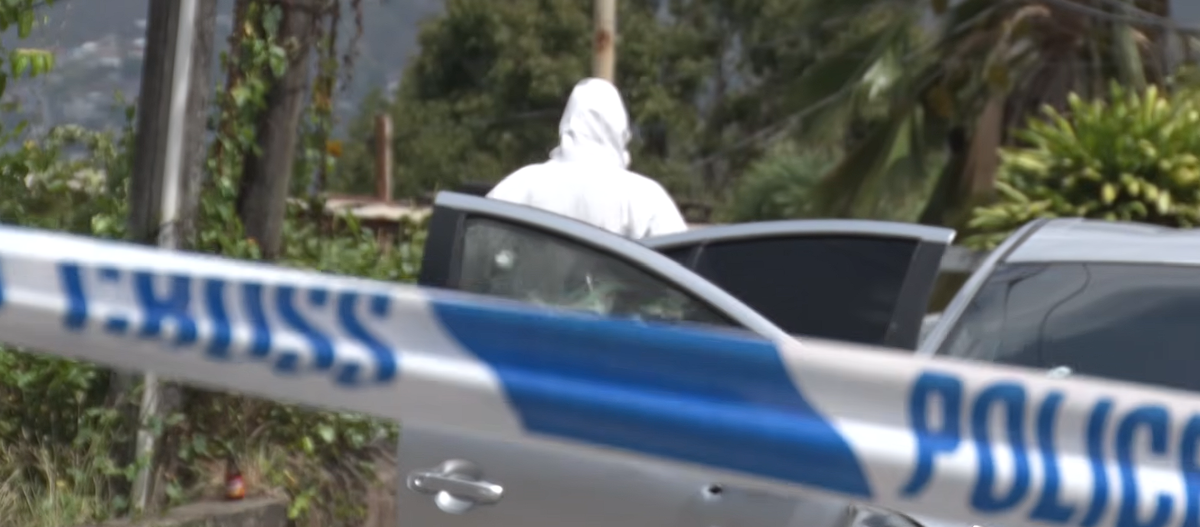
- 23-month-old Akini Kafi, his father Aquil Kafi and family friend Anthony Wilson were shot dead in Belmont on May 7. Akini's mother, Antonia Cain-Kafi, has shown slight improvement and is now in stable condition in the ICU, having previously been listed as critical. Aquil had already lost his 14-year-old son, Zion Roberts, to gun violence in Belmont in July 2025.
- Defence Minister Wayne Sturge confirmed in Parliament that the killings were a reprisal attack tied to the April murder of nine-year-old J'Layna Armstrong. No arrests have been made; police say they are following "strong leads."
- Homeland Security Minister Roger Alexander told the House that Belmont residents had wanted a ZOSO. The same ZOSO Bill that collapsed in the Senate in January is being reintroduced in the new session.
- Housing Minister Phillip Alexander has not retracted his controversial remarks. He has been condemned by his Cabinet colleague Khadijah Ameen and by PNM deputy political leader Sanjiv Boodhu.
- Opposition Leader Pennelope Beckles has publicly offered to work with the Government on the crime fight – the first real public crack in tribal lines on this issue since the election.
The first thing to say is the only thing that should matter. A 23-month-old is dead. His father is dead. The family friend who was with them is dead. Antonia Cain-Kafi, Akini's mother, was shot four times and is in the ICU at the Port of Spain General Hospital, where her condition has shown slight improvement. That is the ground we are standing on this week, and any commentary that loses sight of it is commentary that has already failed.
There is something else worth knowing about Aquil Kafi. In July 2025, he lost his 14-year-old son, Zion Roberts, in a separate Belmont shooting. Ten months later he himself has been killed, alongside his other son. That is one Trinidadian father, two of his children, in less than a year. The Guardian investigations desk reports that 73 children have been killed by gun violence in T&T over the past decade. Four of them, in the first four months of this year alone. An 11-month-old, an 8-year-old, a 16-year-old, and Akini.
Let me state clearly what we know. According to Defence Minister Wayne Sturge, who addressed Parliament on Friday, the Belmont killings on May 7 were a reprisal attack linked to the murder of nine-year-old J'layna Armstrong in April. So we are not talking about a random act, or a robbery gone wrong, or one of those killings that fit no pattern at all. We are talking about a chain of violence that the security services have been tracking, a chain they knew could turn around and take a child, and a chain that has now done exactly that.
That fact is what I keep coming back to.
Within hours of the killings, the political response began to organise itself. Homeland Security Minister Roger Alexander told the House that residents of Belmont had wanted a Zone of Special Operations in the area, and that they were now "highly annoyed" it had not happened. Gail Alexander's column in the Guardian confirms what we already suspected. The ZOSO Bill is being reintroduced when the Second Session of Parliament begins.
The same bill that collapsed in the Senate weeks ago. The same answer the Government couldn't get past the upper house in April is being put back on the table in May, with Belmont's grief providing the moral pressure. And here is the question I keep waiting for someone to answer: what is changing about the bill?
The Prime Minister herself acknowledged in January, after the bill collapsed, that "your UNC government has more powers under an SoE than it would have had under the ZOSO bill." If that was true in January, it is true now, with an SoE actively in force. Which makes the rush to relegislate ZOSO in May look less like a crime-fighting tool and more like a political one.
I have written about national security on this blog before. In The Breach Inside, I argued that the murder of Acting Cpl Anuska Eversley inside her own police station was not a security failure – it was an institutional one. The warning signs had been there for months. The armoury was emptied not because the building lacked legislation but because the people inside the building had been failed by the people meant to oversee them. ZOSO doesn't fix that. ZOSO was never designed to fix that. ZOSO is a perimeter tool, not a culture tool, and the Eversley case told us exactly which tool we needed.
The Belmont case is similar in a different register. Sturge himself has told us this attack was a reprisal – meaning the police, or the State more broadly, had information about the underlying chain. They knew J'layna's killing in April was part of something larger. They knew the people involved would not stop. The question is not whether ZOSO would have ringfenced Belmont in time. The question is what the existing security apparatus did with the intelligence it already had, and whether passing a bill solves any part of that.
I want to be fair here, because middle-of-the-road means something or it means nothing.
The Prime Minister's statement that "the murder rate would be higher" without the State of Emergency deserves serious engagement, not a partisan brush-off. The official figures show 130 murders to May 7 versus 135 over the same period last year. That is a difference of five lives, which is not nothing. But ten people have been killed in the first seven days of May alone, and the Guardian's editorial called the percentage "statistically irrelevant" yesterday. The argument that the SoE has done genuine work deserves a fair hearing, not a partisan one. What I want to ask is the next question. Once the SoE comes off, what does the architecture look like? If the answer is "another SoE," or "a piece of legislation that didn't pass last time," then we are building a security model on a foundation that was never meant to bear weight indefinitely.
Then there is Housing Minister Phillip Alexander, whose remarks after the killings drew condemnation from his Cabinet colleague Khadijah Ameen and from PNM deputy political leader Sanjiv Boodhu, who called them "divisive, inept, racist and disrespectful." Alexander has not withdrawn his comments. In fact, he defended them outside Parliament on Friday and posted again on social media yesterday. There is no version of public office where a minister gets to talk past a dead toddler to make a political point. None. Whatever the underlying argument was meant to be, the moment of delivery was wrong, and the people who voted UNC last April have every right to expect more discipline from the government they put in place. I said in my Year One audit of the government that brighter days remain a promise, not yet a delivery. Days like this one are why.
One more thing I want to flag, because it has been on a slow burn in the official response and ought to be named. At the police service's Sports and Family Day on Saturday, Police Commissioner Allister Guevarro and Roger Alexander both called on citizens to break their silence and identify perpetrators, arguing that community cooperation is what is missing from the crime fight. The point is not wrong. Witness intimidation and community fear are real, and an investigation needs information. But asking ordinary people to risk their lives to compensate for what the police already know, and have not yet acted on, is the wrong order of dependency. Sturge said in the House on Friday that he knows where the Belmont killers are from. Stuart Young called for the Commissioner to interview him on the basis of that statement. That exchange happened in the same room where the public is now being asked to be braver than the people in charge.
What gives me a small piece of hope this week is something I did not expect. Opposition Leader Pennelope Beckles has publicly offered to work with the Government on the crime fight. Whatever you think of her party's record over the last decade – and I have been on record about that record – the offer is the kind of move you only make if you understand that some problems are bigger than the next general election. The Government should take it. Not as a photograph for the press. As a working group on the actual ZOSO Bill text, with the Opposition able to walk in and out without losing face. If the bill passes the next vote on the same terms it failed the last one, we will have learnt nothing.
I will say one more thing, because I have been thinking about it a lot these past few days.
The diaspora reads this story differently from those of you reading it at home. We are not in the WhatsApp groups where Belmont mothers are working out which streets the children take to school. We are not at the funerals. We are watching from London, from Brooklyn, from Toronto, with the strange combination of guilt and anger that comes from being far enough away to be safe and close enough to be affected. I will not pretend my distance gives me clearer eyes. It doesn't. What it gives me is a question I want to leave with you: What is the country we are sending money home to, calling our parents in, planning to retire to, if a 23-month-old can be shot in his own street because of a quarrel he did not start and could not understand?
That question is not rhetorical. It is the question the ZOSO Bill is supposed to answer. We are owed an answer that is more than a name on a vote.